231.938.4673
 Williamsburg, MI



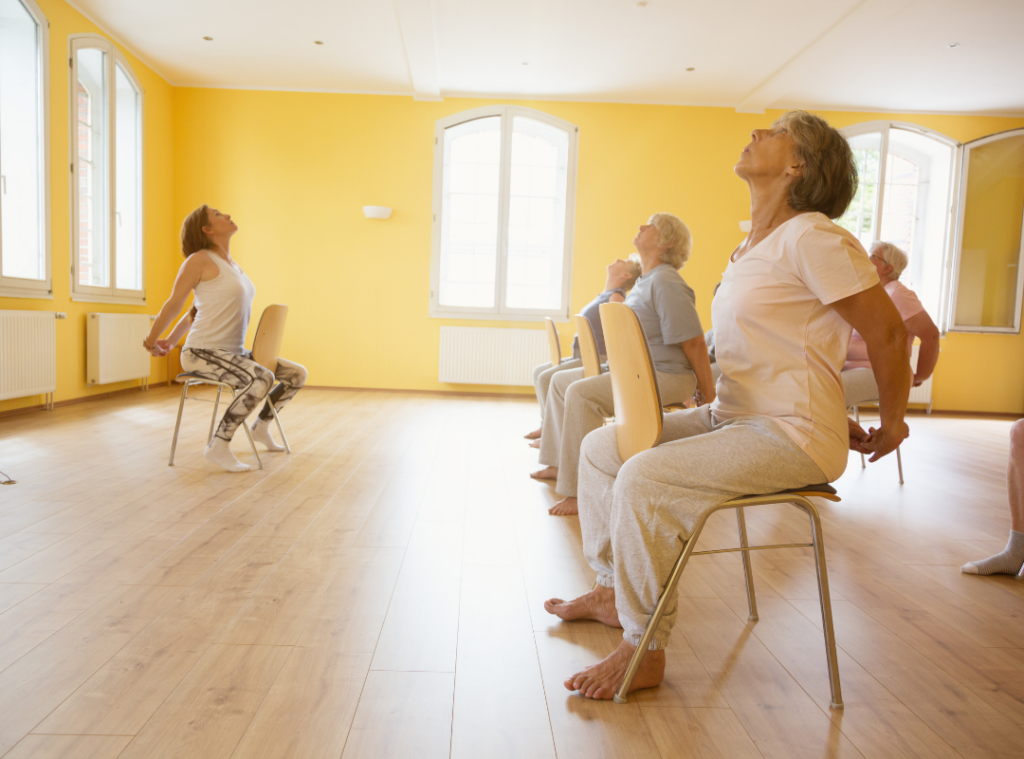
A 15-minute chair exercise routine can make movement more approachable when standing workouts feel difficult or inconvenient. The routine below uses gentle seated movements for the arms, legs, ankles, and upper body without requiring weights or other equipment.
Move at a pace that feels controlled, keep the range of motion comfortable, and rest whenever needed. A shorter session still counts as activity, especially when you are getting started or returning after a break.
Before You Begin: Set Up for Safer Chair Exercise
Choose a sturdy chair that does not roll or slide. Place it on a flat surface with enough open space to move your arms and legs without hitting furniture.
Before starting:
- Sit with your hips toward the front or middle of the seat.
- Keep both feet supported when the movement allows.
- Wear comfortable clothing and secure, supportive footwear.
- Sit upright without forcing your back into a rigid position.
- Begin with small, slow movements.
- Keep breathing instead of holding your breath.
Stop if you experience pain, chest discomfort, dizziness, unusual shortness of breath, or feel faint. People with a health condition, recent surgery, new symptoms, or significant mobility concerns should ask a qualified healthcare professional whether a new routine is appropriate.
The CDC’s physical activity guidance for older adults advises choosing activities that match your abilities and health conditions. MedlinePlus also recommends starting slowly when beginning or returning to exercise.
Your 15-Minute Seated Exercise Routine
Use a timer or clock to move through each part of the routine. The times are guides rather than requirements. Pause, shorten a movement, or take a break whenever you need one.
| Time | Movement |
| 0–2 minutes | Posture, breathing, and shoulder rolls |
| 2–4 minutes | Ankle circles and heel-toe raises |
| 4–6 minutes | Seated marching |
| 6–8 minutes | Arm reaches |
| 8–10 minutes | Seated punches |
| 10–12 minutes | Toe taps or side taps |
| 12–14 minutes | Chair dance combination |
| 14–15 minutes | Slow breathing and cool-down |
Minutes 0–2: Posture, Breathing, and Shoulder Rolls
Sit tall with your feet flat on the floor and your hands resting on your thighs.
Take several comfortable breaths. Then slowly roll your shoulders backward in small circles. After a few repetitions, change direction and roll them forward.
Keep the movement gentle. Your shoulders do not need to make large circles for the warm-up to be useful.
Easier option: Shrug your shoulders slightly up and down instead of making full circles.
Minutes 2–4: Ankle Circles and Heel-Toe Raises
Keep one foot on the floor and lift the other foot slightly. Slowly circle the raised ankle several times in each direction, then switch feet.
Place both feet down. Lift your heels while keeping your toes on the floor, lower them, and then lift your toes while keeping your heels down. Continue alternating at a comfortable pace.
Easier option: Move one foot at a time or make smaller ankle circles.
Minutes 4–6: Seated Marching
Place both feet flat on the floor. Lift one foot a comfortable distance, lower it, and then lift the other.
Continue alternating as though you are marching while seated. Keep your upper body upright and avoid leaning backward to lift your knees higher.
Easier option: Lift only the heel or slide each foot forward instead of raising the whole foot.
Minutes 6–8: Arm Reaches
Begin with your arms relaxed at your sides or your hands resting near your thighs.
Reach both arms forward to a comfortable height, then lower them slowly. You may also alternate arms or reach slightly outward instead of directly ahead.
Keep your shoulders relaxed and stop before the movement causes discomfort.
Easier option: Bend your elbows and lift only your forearms.
Minutes 8–10: Seated Punches
Hold your hands loosely near your chest. Extend one arm forward in a slow punching motion without locking the elbow, then bring it back.
Alternate sides. Keep the movement controlled rather than trying to punch quickly or forcefully.
You can also punch slightly across your body, but avoid twisting farther than feels comfortable.
Easier option: Make the reach shorter or move both hands forward together.
Minutes 10–12: Toe Taps or Side Taps
Begin with both feet under your knees.
Tap one foot forward and bring it back. Alternate feet for several repetitions. You can then tap each foot gently out to the side if you have enough space.
Keep your movements small enough that you remain stable in the chair.
Easier option: Slide your foot instead of lifting it to tap.
Minutes 12–14: Chair Dance for Seniors
Combine two or three movements from the routine, such as seated marching, toe taps, arm reaches, or gentle punches.
You can move with music or follow your own rhythm. The goal is steady, controlled movement rather than keeping up with a beat.
For example:
- March for four counts.
- Tap your toes for four counts.
- Reach your arms forward four times.
- Repeat at a comfortable pace.
Easier option: Choose only one movement and repeat it slowly for the two-minute period.
Minutes 14–15: Slow Breathing and Cool-Down
Slow the pace of your movement. Place both feet on the floor and rest your hands on your thighs.
Take several comfortable breaths. Gently roll your shoulders or open and close your hands.
Avoid pulling deeply into a stretch. The goal is simply to finish the routine gradually rather than stopping suddenly after the faster movements.
How to Adjust the Routine for Your Comfort and Energy
Chair workouts should fit the person rather than forcing everyone to follow the same pace or range of motion.
To make the routine easier:
- Complete a 10-minute chair workout instead of all 15 minutes.
- Take a short break between movements.
- Lift your arms or legs a smaller distance.
- Perform one side at a time.
- Slow each movement down.
- Keep both hands on the chair when extra stability is needed.
To make the routine more active:
- Continue a comfortable movement for slightly longer.
- Add more arm movement to seated marching or toe taps.
- Repeat the routine later in the day rather than making one session too demanding.
- Gradually work toward a 20- or 30-minute chair workout if longer activity remains comfortable.
More effort is not always better. Controlled movement that you can repeat consistently is generally more useful than pushing through pain, poor form, or exhaustion.
How Chair Exercise Fits With Walking and Other Activity
Chair exercise can help add movement to the day, but one short routine does not necessarily provide every type of activity an older adult may need.
The CDC’s exercise recommendations for adults 65 and older include aerobic, muscle-strengthening, and balance activities. The guidance also explains that people who cannot meet the full recommendations should be as active as their abilities and health conditions allow.
Walking may complement seated movement when it is comfortable and appropriate. Other people may need a different activity plan because of balance, pain, endurance, disability, or health concerns.
A healthcare professional, physical therapist, or qualified exercise professional can help identify which activities and intensity levels fit a person’s needs.
For more lower-body movement ideas, explore these daily seated leg exercises for seniors. Try the routines separately at first so you can judge how your body responds before combining exercises.
Movement and Daily Life at Autumn House Williamsburg
At Autumn House Williamsburg, residents can participate in exercise and fitness programs as part of a broader community lifestyle. Other available amenities include art classes, bus trips to local shopping and entertainment destinations, community rooms for socializing, on-site transportation, dining, housekeeping, and laundry services.
Autumn House offers Independent Living, Independent Living with Services, and Assisted Living at 4354 Mt. Hope Rd. in Williamsburg, Michigan. The community’s services and activities can support a more connected daily routine, but this article should not be treated as a personalized exercise or therapy plan.
Readers considering senior living can take the Autumn House Lifestyle Assessment or compare the levels of care at Autumn House Williamsburg.
Frequently Asked Questions
Does the chair workout for seniors really work?
Chair workouts can help older adults add movement to the day when they are performed consistently and at an appropriate pace. What “works” means depends on the goal, such as moving more often, reducing long periods of inactivity, or building a regular exercise habit.
A short chair routine should not be presented as a treatment for a health condition or a guaranteed way to improve strength, balance, or mobility. People with individual health concerns should ask a qualified professional what type of activity is suitable.
Are there any free chair workouts for seniors?
Yes, free chair workouts are available as written routines, community resources, and online videos. People often search for 15-minute chair exercises for seniors on YouTube when they prefer to follow an instructor visually.
Look for routines with clear instructions, a gentle pace, visible modifications, and enough time to change positions safely. Avoid videos that pressure viewers to keep up or use difficult movements without explaining alternatives.
What is the 3-3-3 rule for exercise?
The 3-3-3 rule does not have one universally accepted meaning in exercise. Different programs may use the phrase for different combinations of movements, repetitions, workout days, or time intervals.
Check the exact instructions from the person or program using the term rather than assuming it is a standard guideline. For older adults, a routine should be based on comfort, ability, safety, and consistency instead of a trend-based formula.
Is there a free app for chair exercises for seniors?
Free chair exercise apps may be available, although their features and pricing can change. Look for an app that provides clear demonstrations, beginner-friendly pacing, pause controls, and easier alternatives.
Check who created the exercises and whether the app clearly explains safety limitations. Stop using any routine that causes pain, dizziness, unusual breathlessness, or instability.
My Dad is 93 and a half years old! He is going on three years in independent residency at Autumn House! The support team are wonderful helping him adjust to his aging changes. They are so friendly and conscientious! My Dad is so pleased with their offer of fun and entertaining things to participate in!
Family Member of a Resident