231.938.4673
 Williamsburg, MI



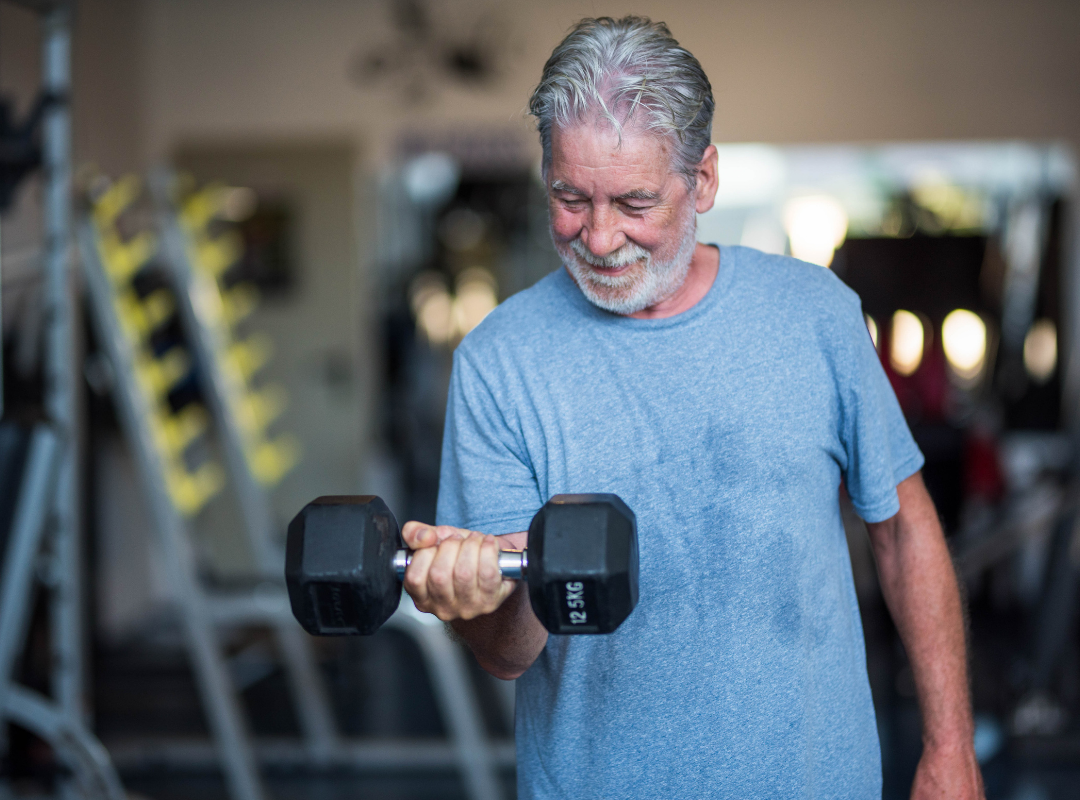
Exercise for men over 60 should include strength training, walking or other aerobic activities, balance exercises, and gentle mobility movements. These activities can support everyday tasks such as standing up from a chair, carrying groceries, walking comfortably, and enjoying hobbies.
You don’t need heavy weights, complicated equipment, or long workouts to get started. The most useful routine matches your current abilities, addresses your personal goals, and allows enough time for recovery.
Whether you are returning to exercise after a long break or looking to maintain an active lifestyle, understanding the different types of movement can help you make informed choices.
Why Regular Exercise Matters After 60
Physical activity plays an important role in maintaining strength, endurance, balance, and mobility as people age. Each type of exercise supports different movements you use throughout the day.
Strength exercises train the muscles you use for lifting, carrying, and standing. Aerobic activities support cardiovascular fitness and endurance, while balance exercises help develop stability and control of movement.
Regular movement also lets you stay engaged in activities you enjoy, whether that means walking outdoors, joining group fitness programs, or spending time with family and friends.
The Physical Activity Guidelines for Americans encourage adults to combine aerobic activity with muscle-strengthening exercises. For adults aged 65 and older, balance training is another important part of a well-rounded routine.
Understanding the Different Types of Exercise
A balanced fitness routine does not need to focus on one activity alone. Different exercises support different physical abilities.
| Exercise Type | Primary Purpose | Examples | Everyday Benefits |
| Strength training | Develop and maintain muscle strength | Chair-assisted squats, resistance-band rows, supported presses | Standing, lifting, and carrying |
| Aerobic exercise | Support cardiovascular fitness and endurance | Walking, stationary cycling, water exercise | Walking longer distances and participating in activities |
| Balance training | Practice stability and body control | Supported weight shifts, supervised standing balance exercises | Navigating everyday movements |
| Flexibility and mobility | Maintain comfortable movement | Shoulder rolls, ankle circles, gentle stretching | Reaching, dressing, and moving comfortably |
| Core stability | Support posture and coordinated movement | Modified bird dogs, seated core exercises | Maintaining posture and controlling movement |
Your priorities may depend on what you want to accomplish. Someone who gets tired during walks may focus on gradually building endurance, while someone who finds it difficult to stand up from a chair may benefit from appropriate lower-body strengthening.
A balanced approach allows these activities to complement one another.
Walking and Other Aerobic Exercises for Men Over 60
Walking is one of the most accessible exercises for men over 60. It requires minimal equipment, can be done at different speeds, and fits easily into daily routines.
Aerobic exercise involves sustained movement that increases breathing and heart rate. Regular participation can help improve cardiovascular fitness and endurance.
Start With Comfortable Walking Sessions
If you have been inactive, begin with a walking duration and pace that feel manageable.
A short walk on level ground may be an appropriate starting point for some people. Others may need a different activity or professional guidance because of balance concerns, joint limitations, or existing health conditions.
Consider these practical tips:
- Choose even, familiar walking surfaces.
- Wear comfortable, supportive footwear.
- Start at a pace that lets you speak comfortably.
- Divide longer walks into shorter sessions when needed.
- Take breaks before becoming overly fatigued.
- Use a recommended mobility aid when appropriate.
For moderate-intensity aerobic activity, the talk test can provide a simple reference. You should generally be able to talk, but not sing comfortably, while exercising at this intensity.
Other Aerobic Activities to Consider
Walking isn’t the only option for building endurance.
Depending on your physical abilities and preferences, alternatives may include stationary cycling, suitable water-based activities, or seated aerobic movements.
Seated exercise can be especially useful when standing for extended periods is difficult. For an equipment-free routine with accessible movements, explore these 15-minute chair exercises for seniors and choose movements that suit your abilities.
Some people also enjoy equipment-based activities. A gentle rebounder workout for seniors is one option, but rebounders require sufficient stability and aren’t appropriate for everyone, especially those with balance difficulties.
The best aerobic activity is one you can perform appropriately, comfortably, and consistently.
Strength Exercises for Men Over 60
Strength training helps maintain the muscles used for everyday activities, including standing, lifting, carrying, and maintaining posture.
Men over 60 don’t need to use heavy weights. Bodyweight movements, resistance bands, light dumbbells, and supported exercises can provide different levels of challenge.
A well-rounded strength routine should target the major muscle groups: legs, hips, back, abdomen, chest, shoulders, and arms.
The following examples illustrate common movement patterns that may be adapted to different abilities.
Chair-Assisted Squats for Lower-Body Strength
Chair-assisted squats use the same muscles you use when sitting down and standing up.
To practice a supported version:
- Place a sturdy, non-rolling chair on a level surface.
- Stand in front of the chair with your feet comfortably apart.
- Slowly bend your hips and knees as if you were preparing to sit.
- Lower yourself only as far as you can control.
- Return to standing using appropriate support.
The goal is controlled movement, not a specific number of repetitions.
If standing balance is limited or getting up from a chair is difficult, ask a qualified professional about a suitable modification.
Supported Rows for Upper-Body Strength
Rows train the muscles used in pulling movements and support upright posture.
Depending on your abilities, you may perform a row seated or standing with an appropriate resistance band or other equipment.
Keep your shoulders relaxed, move slowly, and avoid jerking the resistance. Choose a resistance level that lets you maintain control throughout the movement.
Modified Core Exercises for Stability
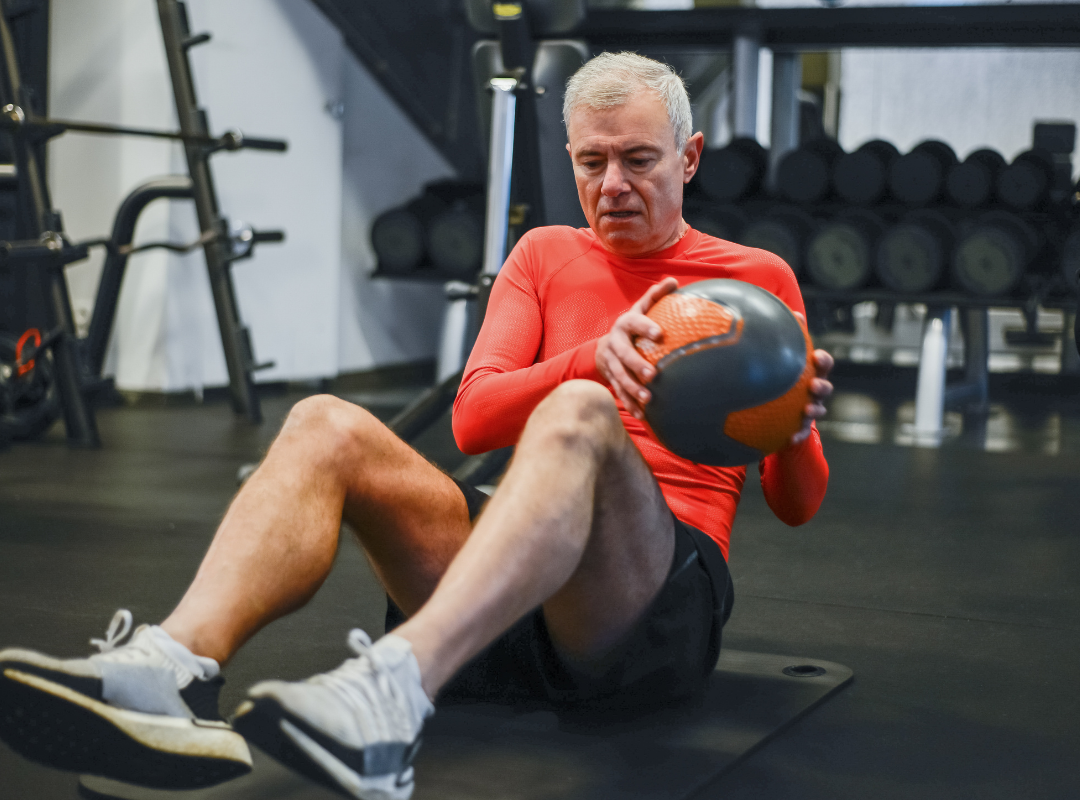
Core exercises involve muscles that help stabilize the trunk during everyday movement.
Modified bird dogs, seated core movements, and supported standing exercises can replace traditional floor-based routines.
For example, a modified bird dog may involve extending one arm or leg while maintaining a stable position. Keep the movement small enough to avoid excessive arching, twisting, or loss of balance.
People who cannot comfortably get onto the floor may prefer professionally recommended seated or standing variations.
Supported Pressing Exercises
Pressing exercises work upper-body muscles involved in pushing movements.
A seated press with light resistance may suit someone who needs extra stability.
Move within a comfortable range, avoid straining, and continue breathing naturally throughout the exercise.
If you have shoulder pain or restricted movement, seek guidance on an appropriate alternative.
Balance, Flexibility, and Mobility Exercises
Balance, flexibility, and mobility are closely related, but each addresses a different aspect of movement.
Balance involves maintaining stability while standing or changing position. Flexibility describes the ability of muscles and surrounding tissues to stretch, while mobility involves moving joints through an appropriate range.
Including these activities can complement walking and strength training.
Supported Balance Exercises
Supported weight shifts are one way to practice controlled changes in standing position.
When appropriate, stand near a sturdy support and gently transfer your weight from one foot to the other.
Keep the movement slow and controlled. If you feel unsteady, avoid challenging balance activities without support.
People who fall often, experience significant dizziness, or have difficulty maintaining balance should seek a professional assessment before starting standing balance exercises.
Gentle Mobility Movements
Mobility exercises focus on moving joints comfortably.
Examples include:
- Shoulder rolls to practice controlled shoulder movement
- Ankle circles to move the ankles through a comfortable range
- Gentle seated trunk movements
- Controlled arm raises within a pain-free range
You can incorporate these movements into a daily routine without needing a separate strenuous workout.
Stretching for Flexibility
Gentle stretching may help maintain comfortable flexibility.
Move slowly, avoid bouncing, and do not force a stretch beyond your comfortable range.
Seated stretching may be more appropriate for people who have difficulty maintaining standing balance.
The goal is comfortable movement, not achieving the deepest possible stretch.
How Often Should Men Over 60 Exercise?
Exercise frequency should reflect your health, current fitness level, and recovery ability.
According to the CDC’s recommendations for adult physical activity, adults should generally aim for at least 150 minutes of moderate-intensity aerobic activity each week and muscle-strengthening activities at least two days a week.
For adults aged 65 and older, the CDC also recommends including balance activities as part of a balanced routine.
These recommendations describe general activity goals. They do not mean someone who has been inactive must immediately exercise for 150 minutes each week.
A Practical Five-Step Starting Framework
A manageable fitness routine starts with understanding what you can do now and what you want to improve.
1. Identify your everyday goals.
Consider activities you want to maintain or make easier, such as walking through a store, carrying groceries, standing comfortably, or joining social outings.
2. Choose activities that match those goals.
Walking can build endurance, while appropriately modified strength exercises can strengthen the muscles you use for standing and lifting. Balance and mobility activities can complement both.
3. Begin at a manageable level.
Choose an activity duration, resistance level, and range of motion that match your abilities. Start with shorter sessions to build consistency.
4. Progress gradually.
Increase one element at a time, such as walking duration, resistance, or exercise difficulty. Allow recovery between challenging strength sessions.
5. Review and adjust your routine.
Pay attention to comfort, fatigue, movement control, and how your body responds. Adjust activities when your needs or abilities change.
For example, someone returning to exercise might alternate comfortable walking sessions with modified strength activities while including gentle mobility work during the week.
This illustrates how activities can fit together, not an individualized exercise prescription.
Build Habits That Support Consistency
Consistency often becomes easier when movement fits into an existing daily routine.
You might take a walk at a familiar time, join a group exercise class, or schedule movement around another regular activity.
Consider tracking practical changes, such as whether you can walk comfortably for longer periods or perform everyday tasks with greater control.
Choose activities you enjoy when possible. A manageable routine that fits your lifestyle is more likely to stick than one that is hard to maintain.
How to Adjust Exercise to Your Abilities
Not every exercise needs to be performed standing, on the floor, or with resistance equipment.
Adjustments may help accommodate differences in mobility, balance, stamina, or comfort.
Depending on the activity, modifications can include:
- Using a sturdy chair or stable support
- Choosing seated rather than standing movements
- Reducing the range of motion
- Using lighter resistance
- Moving at a slower pace
- Dividing activity into shorter sessions
- Allowing additional recovery time
- Seeking qualified supervision when appropriate
For example, someone who finds floor exercises uncomfortable may benefit from a seated core movement. A person who cannot comfortably complete a long walk may prefer several shorter sessions.
Modifications should reflect your abilities and any medical restrictions, not just make an activity easier.
If you are unsure whether a particular movement is appropriate, a healthcare professional or qualified exercise specialist can help you evaluate suitable options.
When to Speak With a Healthcare Professional
Exercise can be beneficial at many activity levels, but individual health circumstances matter.
Medical conditions, medications, changes in sensation, recent surgery, and balance difficulties can affect which activities are appropriate.
Seek professional guidance before beginning or substantially changing your routine if you have:
- New or unexplained symptoms
- A diagnosed heart or neurological condition that affects physical activity
- Significant balance problems or frequent falls
- Reduced sensation that may affect safe movement
- Recent surgery or a major change in health
- Specific activity restrictions from a clinician
- Uncertainty about exercising with an existing medical condition
Conditions such as neuropathy, gastroparesis, or tachycardia may require individualized exercise considerations. General fitness advice should not replace condition-specific medical guidance.
Stop exercising if you develop chest discomfort, faintness, marked dizziness, unusual shortness of breath, or a concerning rapid or pounding heartbeat.
Seek emergency medical assistance for severe or persistent chest pain, fainting, or other potentially serious symptoms.
A clinician or physical therapist can help determine appropriate activities and modifications when health concerns affect movement.
Staying Active at Autumn House Williamsburg
An active lifestyle can include more than individual exercise sessions. Social interaction, recreation, and organized activities can also encourage participation in everyday movement.
At Autumn House Williamsburg, residents can take part in exercise and fitness programs as part of the community’s amenities and activities.
The community also offers art classes, bingo, social spaces, and bus trips to local shopping and entertainment destinations.
Located in Williamsburg, Michigan, near Traverse City, Autumn House provides Independent Living, Independent Living with Services, and Assisted Living.
Families exploring senior living can review the community’s care levels and living options to understand the services and support available.
These community activities provide opportunities for participation and engagement. They should not replace individualized medical care or rehabilitation.
Explore Senior Living at Autumn House Williamsburg
Staying active after 60 means choosing manageable activities, building consistency, and finding ways to do what you enjoy.
If you are exploring senior living for yourself or a family member, you can schedule a tour of Autumn House Williamsburg to learn more about the community’s exercise programs, activities, amenities, and living options.
Frequently Asked Questions
What Exercises Are Suitable for Men Over 60?
Suitable options may include walking, light resistance training, chair-supported movements, balance exercises, and gentle stretching.
For beginners, the most important consideration is choosing activities that match current abilities. Someone with limited mobility may need seated or supported alternatives, while someone who is already active may be able to do more challenging exercises.
How Often Should Older Adults Exercise?
The general recommendation is to aim for 150 minutes of moderate-intensity aerobic activity weekly, plus muscle-strengthening activities at least two days a week.
These activities do not need to be completed in one long session. For example, you can split moderate aerobic activity into shorter sessions throughout the week. Adults aged 65 and older should also include balance training.
What Exercises Help Improve Balance?
Appropriate balance training may include supported weight shifts, controlled standing exercises, and movements that strengthen the muscles used for standing and walking. If you feel unsteady, start with professional guidance rather than trying unsupported single-leg standing or other challenging exercises.
When Should Someone Ask a Clinician Before Exercising?
Consult a clinician if you have unexplained symptoms, significant health changes, exercise restrictions, or medical conditions that may affect the safety of activity.
Seek professional guidance if you experience concerning symptoms during exercise or aren’t sure how to adapt an activity to your abilities.
My Dad is 93 and a half years old! He is going on three years in independent residency at Autumn House! The support team are wonderful helping him adjust to his aging changes. They are so friendly and conscientious! My Dad is so pleased with their offer of fun and entertaining things to participate in!
Family Member of a Resident