231.938.4673
 Williamsburg, MI



Exercise for men over 61 should combine strength, cardiovascular movement, balance, mobility, and enough recovery. The right routine starts with your current abilities and supports activities that matter in daily life, such as walking, standing, carrying items, and joining social outings.
You do not need to train as you did decades ago to make meaningful progress. The goal is to choose movements you can perform with control and continue doing consistently. You will learn how different exercises work together, how to choose a practical starting point, and when a health concern calls for professional guidance.
What Makes a Well-Rounded Exercise Routine After 60?
A well-rounded routine includes strength, cardiovascular activity, balance, mobility, and core stability. Each part supports a different aspect of daily movement, but they work best together. Strength can help with standing and carrying, while balance and mobility can make those movements feel steadier and more comfortable.
The National Institute on Aging identifies aerobic, muscle-strengthening, and balance activity as key parts of exercise for older adults. Your routine should also allow time for recovery and reflect what you can do comfortably and safely.
Fitness Should Support the Life You Want to Keep Living
Fitness for men over 60 is most useful when it supports real activities. You may want to rise from a chair more comfortably, walk through a store, board transportation, carry household items, or take part in outings without feeling as tired or uncertain.
Progress does not have to mean lifting heavier weights every week. Greater control, better movement confidence, or the ability to stay active for longer can also show that your routine is working.
Strength, Cardio, Balance, or Mobility: What Should You Prioritize?
Most men benefit from combining several types of exercise. Your priorities may shift based on what you currently find difficult. Someone who tires during walks may focus more on endurance, while someone who feels unsteady may need more balance work and professional guidance.
| Exercise category | What it supports | Approachable examples | When an adjustment may help |
| Strength | Standing, lifting, carrying, and posture | Chair-assisted squats, supported rows, seated presses | When resistance, standing, or full movement feels difficult |
| Cardiovascular activity | Stamina and sustained movement | Walking or another suitable continuous activity | When you need shorter sessions, a slower pace, or more rest |
| Balance | Stability and movement confidence | Supported standing and weight-shifting movements | When you need a sturdy surface or supervision |
| Mobility and flexibility | Comfortable range of motion | Gentle joint movements and controlled stretches | When a smaller range feels more comfortable |
| Core stability | Posture and controlled movement | Modified bird dogs or supported core movements | When floor positions or unsupported movement are impractical |
This comparison can help you identify what deserves more attention, but you do not have to choose only one category. A useful routine brings the areas together in a way that fits your abilities and goals.
For another form of low-impact movement, explore this gentle rebounder workout for seniors and heart health. A rebounder may not be suitable for everyone, particularly when balance or medical concerns are present, so choose activities that match your circumstances.
A Practical Starting Framework for Men Returning to Exercise
A useful plan for exercise for men over 61 begins with what you can do comfortably today, not what you could do years ago. This lowers frustration and makes it easier to notice genuine progress.
1. Start With Your Current Ability
Notice whether you can sit and stand comfortably, move without support, and remain active without unusual symptoms. Consider whether pain, dizziness, balance concerns, shortness of breath, or a health professional’s restrictions may affect your choices.
2. Choose Movements That Match Everyday Goals
Connect each activity to something meaningful. Your goal might be walking farther, improving posture, carrying light items, joining a fitness program, or feeling steadier during outings.
3. Make Exercise Easier to Repeat
Select movements that fit your available space, equipment, mobility, and daily schedule. A simple routine you can repeat regularly often provides more value than a complicated plan you quickly abandon.
4. Progress One Part at a Time
Avoid increasing resistance, repetitions, session length, and exercise difficulty all at once. Changing one part at a time makes it easier to understand how your body responds.
5. Include Recovery and Reassessment
Give yourself time to recover and pay attention to how you feel during and after the activity. Adjust the routine if your energy changes, a movement becomes uncomfortable, or your health guidance changes.
Exercises That Build Strength for Everyday Movement
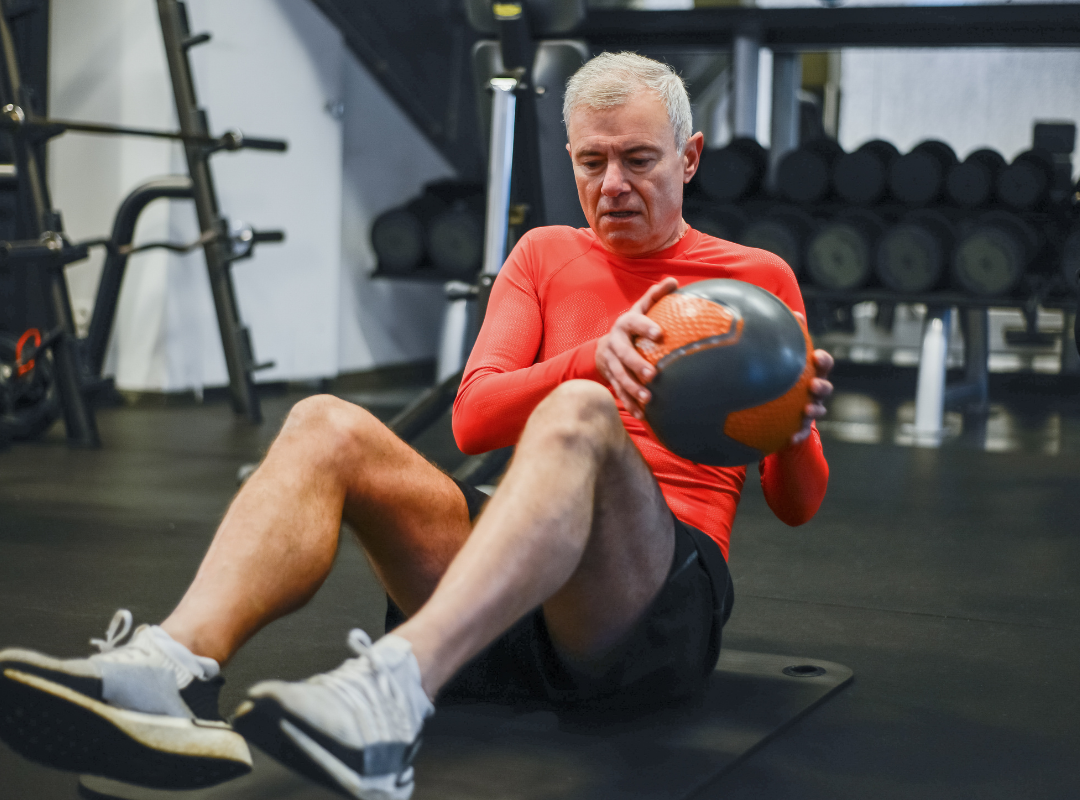
Useful workouts for men over 60 often include movements that resemble daily tasks. The exact exercise and level of resistance should fit your ability, and a qualified professional can help you modify movements when needed.
Chair-Assisted Squatting Movements
A squat-like movement uses many of the same muscles involved in sitting down and standing up. Beginning with a sturdy chair can provide a clear target and added confidence. Move slowly and use support when needed.
Supported Rows for Posture and Pulling Strength
Rows work muscles used in pulling movements and upright posture. They may be performed with suitable resistance while seated or standing with support, depending on your balance and comfort.
Modified Core and Stability Movements
Core stability helps you control your posture and transfer force between your upper and lower body. Modified bird dogs, seated movements, or supported standing exercises may be more practical than getting down on the floor.
Supported Pressing Movements
Pressing exercises may support upper-body strength used in daily activities. A seated or supported position can make the movement more manageable when standing balance is a concern.
Walking and Other Comfortable Continuous Movement
Walking can build endurance and may be divided into shorter periods during the day. The CDC’s physical activity guidance for adults recommends at least 150 minutes of moderate-intensity activity each week and muscle-strengthening activity on two days. The 150 minutes can be divided into shorter periods across the week, and some activity is better than none.
How to Adjust a Workout When Balance, Mobility, or Confidence Has Changed
An exercise is not truly accessible if you do not feel secure enough to try it. Fear of falling, difficulty getting up from the floor, fatigue, limited movement, or uncertainty about equipment can all make a standard workout feel unrealistic.
Helpful adjustments may include:
- Using a sturdy chair or a stable surface for support
- Choosing seated or standing alternatives to floor exercises
- Reducing the range of a movement
- Moving slowly and taking more rest
- Exercising with qualified support when appropriate
These changes do not make the workout less worthwhile. They allow you to practice with greater control. If reduced sensation, frequent unsteadiness, or another condition affects your safety, ask a healthcare or rehabilitation professional which modifications are appropriate.
How to Turn Occasional Workouts Into a Lasting Fitness Routine
Consistency becomes easier when movement fits naturally into your day. You might choose a regular time, connect exercise to an existing routine, or join an organized program that adds structure and social contact.
Track changes that matter outside the workout. You may notice that standing feels smoother, walks feel more manageable, or you are more willing to join an outing. These practical changes can be more motivating than focusing only on repetitions or resistance.
The National Institute on Aging also recommends choosing activities you enjoy, setting realistic goals, and making physical activity part of your routine. A mix of individual activity and group programs can help different people stay engaged.
As you consider which routines and surroundings may support your interests, the Lifestyle Assessment can help you think through your preferences and possible next steps.
When Health Conditions May Change Your Exercise Plan
A health condition may affect the type, pace, position, or amount of exercise that is appropriate for you. Symptoms, medications, sensation, balance, digestive concerns, and heart-rate responses can all influence how a routine should be planned.
Peripheral neuropathy may cause numbness, weakness, pain, or difficulty sensing temperature and position. These changes can affect walking and balance, so exercise selection may need to account for sensation and stability. Gastroparesis may cause nausea, vomiting, bloating, upper abdominal pain, or feeling full soon after eating, which can influence when certain positions or activities feel comfortable. The National Institute of Neurological Disorders and Stroke and the National Institute of Diabetes and Digestive and Kidney Diseases provide more information about these symptoms.
General exercise guidance cannot determine what is safe for a specific diagnosis. Speak with an appropriate healthcare professional before beginning or changing your routine when you have:
- New or unexplained symptoms
- A diagnosed heart or neurological condition
- Changes in balance or sensation
- Activity restrictions or recent health changes
Stop exercising if you develop chest discomfort, fainting, marked dizziness, unusual shortness of breath, or a rapid or pounding heartbeat. Contact a healthcare professional for guidance about symptoms that occur during activity. The American Heart Association explains that tachycardia can have different causes and may involve palpitations, weakness, chest discomfort, dizziness, shortness of breath, or fainting. Call 911 for sudden or severe chest discomfort, especially when it occurs with dizziness, nausea, or shortness of breath.
Staying Active at Autumn House Williamsburg
An environment that supports movement, social activity, transportation, and changing daily needs may make an active routine easier to maintain. At Autumn House Williamsburg, residents can take part in exercise and fitness programs, socialize in community rooms, attend art classes or bingo, and join bus trips to local shopping and entertainment destinations.
Autumn House Williamsburg offers Independent Living, Independent Living with Services, and Assisted Living. Available support includes mobility assistance and physical, occupational, and speech therapy services. Families can explore the community’s levels of care to understand how different options connect independence with available services.
Discover a Setting That Supports an Active Routine
Strength, endurance, balance, and mobility all play a role in staying active. A routine becomes more sustainable when the movements are manageable, recovery feels reasonable, and you have opportunities to remain involved in activities you enjoy.
To see how exercise programs, activities, transportation, and living options come together at Autumn House Williamsburg, plan a community visit. You can also contact the community or call 231-938-4673 to ask questions. Families who are unsure how much daily support may be appropriate can begin with the Care Assessment.
Frequently Asked Questions
How much exercise should a 61-year-old man get?
A healthy 61-year-old man should generally work toward at least 150 minutes of moderate aerobic activity per week and two days of muscle-strengthening activity. The activity can be divided into shorter sessions across the week. Your appropriate amount may differ if you have symptoms, a medical condition, or a long period of inactivity. Begin at a manageable level and ask a healthcare professional for individualized guidance when needed.
Will exercise help with neuropathy?
Exercise may be appropriate for some people with neuropathy, but the answer depends on its cause and your symptoms. Reduced sensation, weakness, pain, or balance changes may affect which activities are safe. A healthcare or rehabilitation professional can help you choose movements, footwear, support, and intensity that fit your needs. Exercise should not be treated as a substitute for evaluation or treatment.
Can core exercises help gastroparesis?
Core exercises are not a treatment for gastroparesis. Digestive symptoms may affect which positions feel comfortable and when physical activity is appropriate. Some movements that place pressure on the abdomen may not feel suitable during symptoms. Ask your healthcare professional how to time and modify exercise based on your condition and treatment plan.
Should people with tachycardia exercise?
Some people with tachycardia may be able to exercise, but the cause and symptoms must be considered first. A fast heart rate can be a normal response to activity, yet certain forms of tachycardia require medical evaluation and individualized guidance. Do not begin or intensify exercise based only on general fitness advice. Speak with a healthcare professional, especially if rapid heart rate occurs at rest or comes with dizziness, chest discomfort, shortness of breath, or fainting.
My Dad is 93 and a half years old! He is going on three years in independent residency at Autumn House! The support team are wonderful helping him adjust to his aging changes. They are so friendly and conscientious! My Dad is so pleased with their offer of fun and entertaining things to participate in!
Family Member of a Resident